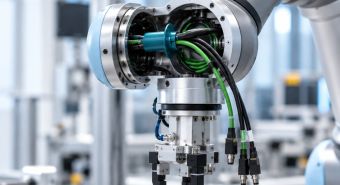
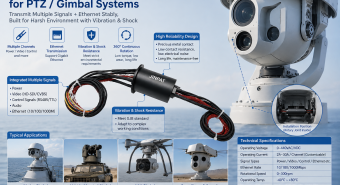
Imagine a coastal surveillance tower equipped with a 360° rotating thermal camera array, radar module, and liquid-cooled optical housing. The engineering team behind this project faced a common but frustrating obstacle: how do you transmit high-speed video data, control signals, USB connections, and coolant fluid across a continuously rotating platform—without tangled cables, signal degradation, or leaks?
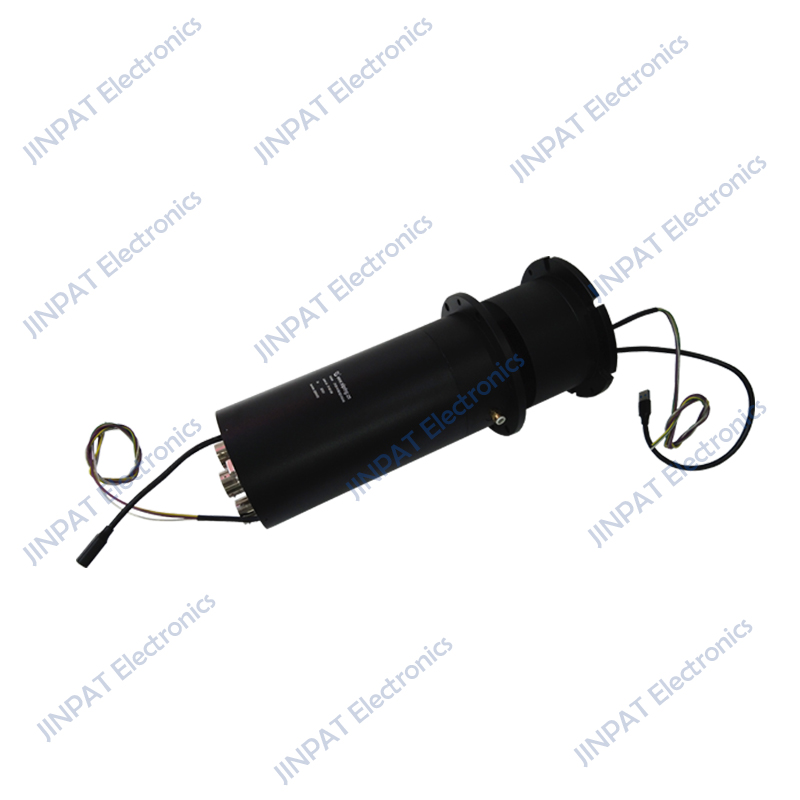
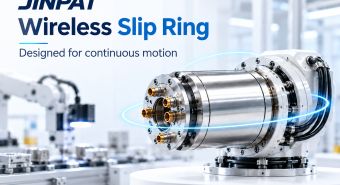
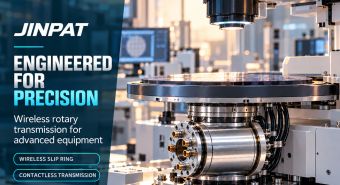
Traditional setups often require stacking multiple separate slip rings—one for power, one for Ethernet, one for fluid—resulting in a bulky, failure-prone assembly. This is exactly the problem the JINPAT LPPL series gas-liquid integrated slip ring was designed to solve.
By consolidating multi-channel electrical signals, an E3 Ethernet module, a U3 USB 3.0 interface, and gas-liquid rotary channels into a single compact housing, the LPPL slip ring allowed the surveillance tower to rotate freely while maintaining:
Uninterrupted live video feed transmission via the Ethernet channel
Real-time data logging through the USB 3.0 connection
Continuous coolant circulation for the thermal imaging module
Stable low-voltage power and control signal transfer across all axes
The result was a dramatic reduction in mechanical complexity and a marked improvement in system uptime. No more troubleshooting intermittent signal drops caused by wiring wear, and no more separate maintenance schedules for isolated slip ring units.
For engineers designing rotating security infrastructure—whether coastal towers, airport perimeter systems, or mobile surveillance robots—this case illustrates a broader lesson: integration isn't just about saving space. It's about building systems that are inherently more reliable because there are fewer points where things can go wrong. The JINPAT LPPL series is proof of that principle in action.